
OnlyFans ranking cards are usually read as static snapshots, but they actually store a timeline of pricing behavior. This guide explains how to read those cards as price histories and trend signals instead of one-time numbers. If you have ever wondered why a page looked cheaper last month, or how to spot a hike before it lands, the answer is often already printed on the card. BestOnlyFans cards and similar ranking records are the working examples throughout.
The goal here is practical. By the end, you should be able to look at a card and estimate where a price is heading, how reliable the page looks, and whether waiting or subscribing now makes more sense.

The Components of a Standard OnlyFans Ranking Card
A ranking card is a compact record of a creator page at a moment in time. The listed price is the most quoted value, but on its own it says nothing about direction. A $9.99 price could be stable for a year, or it could be the third step of a climbing ladder.
To read direction, you need the surrounding fields: media count, like totals, posting timestamps, and the category tag assigned by the ranking site. A move into a narrower niche tag often accompanies a pricing change, because the creator is repositioning the page for a different audience. A move out of a promotional tag back into a standard tag usually means a discount window has closed.

| Data Field | What It Measures | Reliability Level |
|---|---|---|
| Listed price | Current base subscription rate, or $0 for free pages | High at capture time, decays quickly |
| Media count | Total posts and uploads visible on the page | High, but updated on the site’s own schedule |
| Like totals | Cumulative engagement across posts | Medium, older likes may be hidden or removed |
| Post frequency estimate | Average uploads per week over a recent window | Medium, depends on the sample window used |
| Category classification | Niche and audience segment assigned by the site | Medium, editorial rather than automatic |
| Last updated timestamp | When the card data was last refreshed | High, and the single most useful field |
If a card shows a price that conflicts with what the creator page currently displays, trust the creator page and treat the card as history, not as a live quote.
Paid subscriptions on the platform run from $4.99 at the minimum to $49.99 at the maximum, with most paid pages clustering between $5 and $10. Free pages set their base price to $0 and earn through pay-per-view messages and tips instead.
Detecting Price Volatility from Ranking Data
Volatility is the pattern of change, not the size of any single change. Two creators can both sit at $14.99 today, but one has held that rate for eight months while the other moved four times in the same period. The second page carries more timing risk, and the card history usually reveals it through repeated price entries or shifting promotional tags.

- Introductory discount cycling: the first month drops below the base rate, then returns to full price. Promotional first months can sit below $4.99, but the base rate itself never does.
- Holiday premium periods: short seasonal increases that revert afterward, often paired with themed content pushes.
- Follower-milestone hikes: a permanent step up timed to a visible growth marker on the page.
- Content-type pivot adjustments: a price change that follows a shift in what the page publishes, not just how much.
- Platform-wide trend responses: price moves that track broader shifts across many pages at once rather than one creator’s decision.
| Volatility Pattern | Subscriber Impact | Frequency Observed |
|---|---|---|
| Stable pricing | Predictable renewal cost, easy budgeting | Common among established paid pages |
| Cyclical promotions | Cheap entry windows, full price afterward | Regular, often monthly or quarterly |
| Gradual increases | Small renewal jumps that add up over time | Occasional, tied to page growth |
| Sudden hikes | Large single-step change with no warning | Less common, usually milestone-driven |
| Free-to-paid transitions | Existing free followers lose access unless they pay | Rare but well documented |
Existing access continues until the paid period ends, but renewal does not happen at the old rate. That single rule turns price history into a timing tool, because a hike does not cut off current subscribers immediately.
Tip: if a card shows two or more price steps upward in the last six months, assume another step is plausible and budget for the higher rate rather than the one you see today.
Content Velocity as a Subscription Value Indicator
Price means little without output. A $20 page posting daily can be better value than a $5 page posting once a month. Ranking cards give you enough date and count information to estimate output without subscribing first.

- Record the media count and the last updated timestamp from the card as your starting baseline.
- Return after seven days and record the new media count. The difference is your weekly output estimate.
- Divide the listed subscription price by that weekly figure to get a rough cost per post, then compare across several cards.
Cards are refreshed on the site’s schedule, so a week of apparent silence may simply be a stale capture. Two consecutive readings narrow the error considerably. A page whose count barely moves across two checks is likely dormant or running on scheduled backfill rather than active publishing.
A page posting three times a week with one long-form upload may deliver more usable content than one posting daily with short fragments. Use velocity as a filter for dead pages first, then judge the remaining candidates on the content itself. This two-stage approach saves time and avoids dismissing a low-volume page that happens to publish exactly what you want.
Cross-Referencing Multiple Ranking Sources
Two sites can show the same page at different prices, and neither is necessarily wrong.
- Data refresh intervals: one site updates daily, another weekly, so they capture different moments.
- Regional display variations: currency formatting or tax-inclusive display can change the number shown.
- Captured promotional periods: one card may have been recorded during a first-month discount.
- Cached versus live page data: an old cached record can persist long after the creator page changed.
Reading multiple sources is a methodology question as much as a data question. Sites that publish how they collect and refresh card data are easier to trust than sites that show a number with no timestamp. BestOnlyFans, for example, documents the ranking approach it applies to its cards, which makes discrepancies easier to audit against the creator page itself.
For anyone moving beyond casual reading and into managing multiple subscriptions or pages, structured guidance helps: the best onlyfans management for beginners material covers the practical side of tracking rates, renewals, and spend across accounts.
Predicting Free-to-Paid Conversions from Card Patterns
Free pages carry a $0 base price and earn through pay-per-view messages and tips, with unlocks reaching up to $50 and paid chat commonly running $3 to $5 per message. A free page that begins monetizing more aggressively is often preparing to introduce a subscription fee.
Watch for a rising media count paired with a shrinking free preview section, or a jump in the number of paid-message mentions in the page description. Another signal is a category move from a broad tag into a monetization-focused one. None of these proves a conversion is coming, but three or more appearing together is a meaningful pattern.

If a free page does convert, existing followers typically keep access to what they already unlocked, while new content moves behind the paywall. That distinction matters when deciding whether to unlock older pay-per-view items before a suspected transition.
Timing Subscriptions Around Predicted Price Shifts
The creator page remains the source of truth for the rate you will actually be charged. Ranking cards support the decision, but they never replace that final check before payment.
- Confirm the current rate on the creator page rather than relying on the card alone.
- Check whether auto-renewal is active, since a price change stops renewal automatically.
- Note how confident the ranking site’s price prediction appears based on how many historical steps it shows.
- Set a calendar reminder before the anticipated change window so you can decide with current information.
Promotional first months are the cheapest legitimate entry point and can sit below $4.99, for example a $3 first month. The base rate still cannot go below $4.99, so a card showing a sub-$5 base price is either a promotion or a data error. Card verification holds on the platform are $0.10 and refunded within days, which is a separate charge from any subscription.

Limitations of Ranking Card Predictive Power
A card cannot see a decision that has not happened yet, and it cannot see anything that happens off the platform entirely.
- Creator hiatus without announcement: output stops but the card keeps showing the old rate and counts.
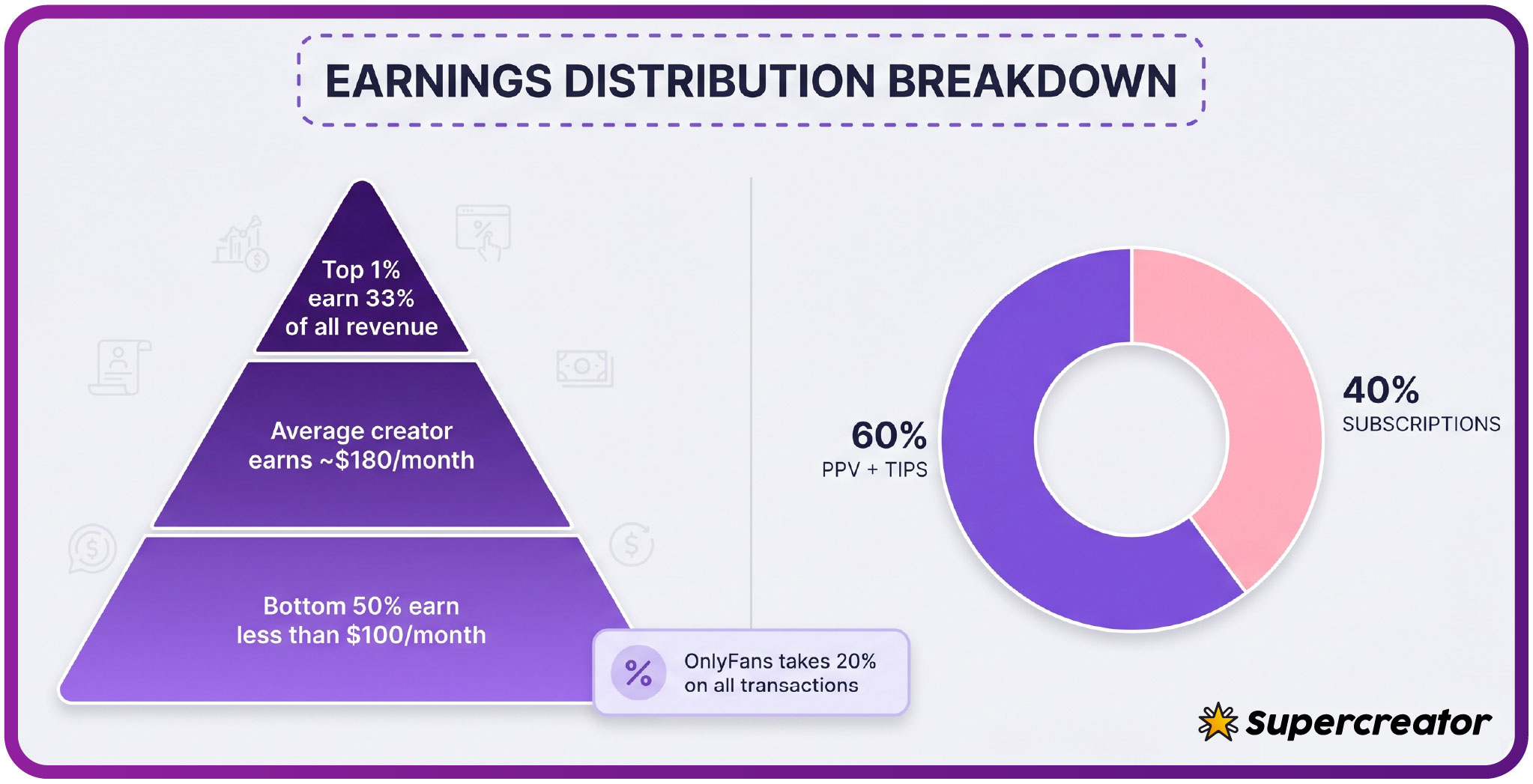
- Behind-the-scenes platform fee restructuring: the 20% platform cut and 80% creator share can shift incentives without any visible price change.
- External sponsorship income changes: off-platform earnings can alter pricing strategy invisibly.
- Sudden content policy enforcement: removals can change the page’s value overnight.
- Coordinated creator strikes or migrations: groups of pages can move or pause together, breaking individual patterns.
Data lag compounds all of these. A card refreshed monthly can be three weeks behind reality, which is enough time for a hike, a promotion, or a full model change to occur unrecorded. Platform growth itself adds noise, since the audience mix shifts year over year and pricing norms drift with it.
FAQ
How often do ranking sites like BestOnlyFans refresh their price data?
Refresh schedules vary by site. Some update daily, others weekly or monthly, and the card’s last updated timestamp is the only reliable way to know which applies to the record you are reading.
Can I trust a low price on a ranking card if the site shows it was higher last month?
Confirm the rate on the creator page. If the lower figure was a first-month discount, the base price may still sit at the higher level for renewals.
What does it mean when a ranking card shows zero price history?
It usually means the page is free, or that the site began tracking it recently. A $0 base price indicates a free page earning through pay-per-view and tips rather than subscriptions.
Should I subscribe immediately if a card signals an impending price increase?
Not automatically. A raise stops auto-renewal but does not revoke current access, so you keep the period you already paid for. Confirm the rate first, then decide whether locking in now is worth it.